The Supreme Court of India has upheld the Election Commission's documentation framework for the Special Intensive Revision of electoral rolls, affirming the commission's authority and stating that Aadhaar is not proof of citizenship.

A nine-judge Supreme Court bench has reserved its order on petitions related to discrimination against women at religious places, including the Sabarimala temple, and the scope of religious freedom.

The apex court ordered that the Centre and state authorities comply with its directions immediately, and warned of 'serious action' if directions are defied in any form.
The Supreme Court has declined to intervene in a petition concerning the deletion of names from voter lists in West Bengal, directing the petitioners to seek redressal through established appellate tribunals.

The Supreme Court granted bail to the wife of the alleged 'kingpin' of a Rs 3,700-crore scam and directed that no court shall de-freeze the assets attached by the probe agencies in the case till the trial in the FIRs against the accused are concluded.
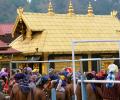
The Supreme Court of India questioned the Centre regarding the eligibility of non-devotees to challenge the customs of the Sabarimala temple in Kerala, during a hearing on religious freedom and discrimination against women at religious sites.
It was hearing the plea which alleged that the collegium recommendation of the high court was void as one of the senior judges, Justice Nisha Banu, was not part of the deliberations.
The Supreme Court has urged political leaders to promote fraternity while declining to entertain a PIL seeking guidelines on political speeches, emphasizing the need for objectivity and even-handedness in addressing concerns about hate speech and constitutional values.

The Supreme Court on Tuesday stayed trial proceedings against former Karnataka chief minister BS Yediyurappa in a sexual harassment case filed under the Protection of Children from Sexual Offences Act.
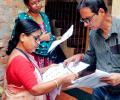
The Supreme Court expressed concern over threats to election officials in West Bengal and other states, urging the Election Commission to take action. The court also addressed the lack of cooperation from state governments in electoral roll revisions.

A bench comprising Chief Justice Surya Kant and Justices Joymalya Bagchi and N V Anjaria said it would issue whatever orders or clarifications are required in the matter.
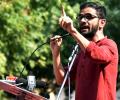
The Supreme Court granted interim bail to two Delhi riots accused, while addressing concerns about conflicting views on bail under the Unlawful Activities Prevention Act (UAPA). The court referred the question of law on whether prolonged incarceration can override UAPA restrictions to a larger bench.
Supreme Court judge Surya Kant expressed his reluctance to order urgent listing of cases on the same day, except in extreme circumstances, highlighting the workload and sleep deprivation of judges.
The Supreme Court ensured a widow received compensation 23 years after her husband's death in a train accident, highlighting the court's commitment to justice for the poor.

'Except facilitating builders in default, it is not doing anything else. Better to just abolish this institution.'

The Supreme Court of India has dismissed a Public Interest Litigation (PIL) seeking a nationwide policy for menstrual leave for women students and workers, citing concerns about potential negative impacts on female employment and the reinforcement of gender stereotypes.
The CJP's rapid rise on social media reflects growing digital dissent and youth frustration with issues like unemployment and exam-paper leaks.
The Supreme Court has expressed serious concern over the 'hostage' situation involving seven judicial officials in West Bengal's Malda district, demanding explanations from state officials and authorising the Election Commission to seek a CBI or NIA probe.

The Supreme Court has referred Christian Michel James' plea for release in the AgustaWestland VVIP chopper scam case to another bench. The Delhi High Court previously dismissed his petition, but James continues to challenge his detention and the India-UAE extradition treaty.
The Centre has asked the Supreme Court to reconsider its judgements decriminalising adultery and same-sex relationships, arguing they were based on a subjective application of 'constitutional morality'.

The Supreme Court has stated it will not make structural changes to religious practices at the Bankey Bihari temple in Vrindavan, hearing a petition challenging administrative decisions affecting traditions.

The Supreme Court has deferred the hearing on a PIL alleging large-scale banking fraud involving the Anil Dhirubhai Ambani Group and its firms to May 8.
The Supreme Court of India has ruled that a minor child cannot be forced to carry a pregnancy to term, urging the government to amend laws to allow rape survivors to terminate unwanted pregnancies beyond 20 weeks.
The Supreme Court has directed all High Courts to submit details of pending acid attack cases and is considering setting up special courts for their expeditious disposal. The court is also considering amending the law to include acid attack survivors under the Rights of Persons with Disabilities Act.

The Supreme Court of India has asserted its jurisdiction to determine what constitutes a superstitious practice within a religion, during a hearing on petitions related to discrimination against women at religious sites.
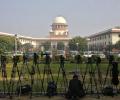
A nine-judge Supreme Court bench has commenced hearing on petitions related to discrimination against women at religious places, including the Sabarimala temple, and the scope of religious freedom across faiths.

The Supreme Court questioned the chief priest of the Sabarimala Ayyappa Temple regarding the constitutionality of preventing believers from touching the deity, during hearings on discrimination against women at religious sites.
The Supreme Court has requested the Election Commission to consider extending the deadline for submitting enumeration forms for the Special Intensive Revision (SIR) of electoral rolls in Kerala, due to the ongoing local body elections.
The Supreme Court has agreed to list for final hearing the pleas challenging the validity of certain provisions of the Places of Worship (Special Provisions) Act, 1991.

The Supreme Court has criticised the Gurugram Police and a magistrate for their handling of a four-year-old rape victim's case, demanding the presence of key officers and investigation records in court.

The Supreme Court of India has directed all high courts to establish timelines for trial courts to expedite the conclusion of acid attack cases across the country, emphasising the need for a more proactive approach and adequate compensation for victims.

The Supreme Court has declined to entertain petitions seeking action against Assam Chief Minister Himanta Biswa Sarma regarding a viral video, advising petitioners to approach the Gauhati High Court instead.
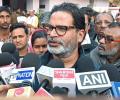
The Supreme Court declined to entertain a petition by Jan Suraaj Party seeking annulment of the 2025 Bihar Assembly elections, citing violation of the Model Code of Conduct. The court directed the party to approach the Patna High Court.

In a relief to former BCCI president Anurag Thakur, the Supreme Court on Thursday cleared decks for his association with the board by modifying its January 2017 order.

The Supreme Court has permitted the Unnao rape survivor to become a party in the CBI's petition challenging the suspension of Kuldeep Singh Sengar's life imprisonment, affirming the victim's right to be heard in the proceedings.

The Centre has informed the Supreme Court that the restriction on women of menstruating age entering Kerala's Sabarimala temple is a matter of religious faith and denominational autonomy, falling outside the purview of judicial review. Solicitor General Tushar Mehta argued that courts should not apply 'secular standards of reason' to religious practices.
The Supreme Court has criticised the Gurugram Police's handling of a three-year-old rape victim's case, citing an 'insensitive' approach and ordering key officials to appear before the court with all investigation records.
Three academics involved in drafting a controversial NCERT textbook chapter on corruption in the judiciary have approached the Supreme Court to defend their work, stating it was a collective effort and not the view of any single individual.
The Centre has directed the NCERT to review all textbooks after the Supreme Court raised concerns about 'offending' content on corruption in the judiciary in a Class 8 social science book.

The court is hearing appeals against a CCI order imposing a penalty on Meta and WhatsApp.
